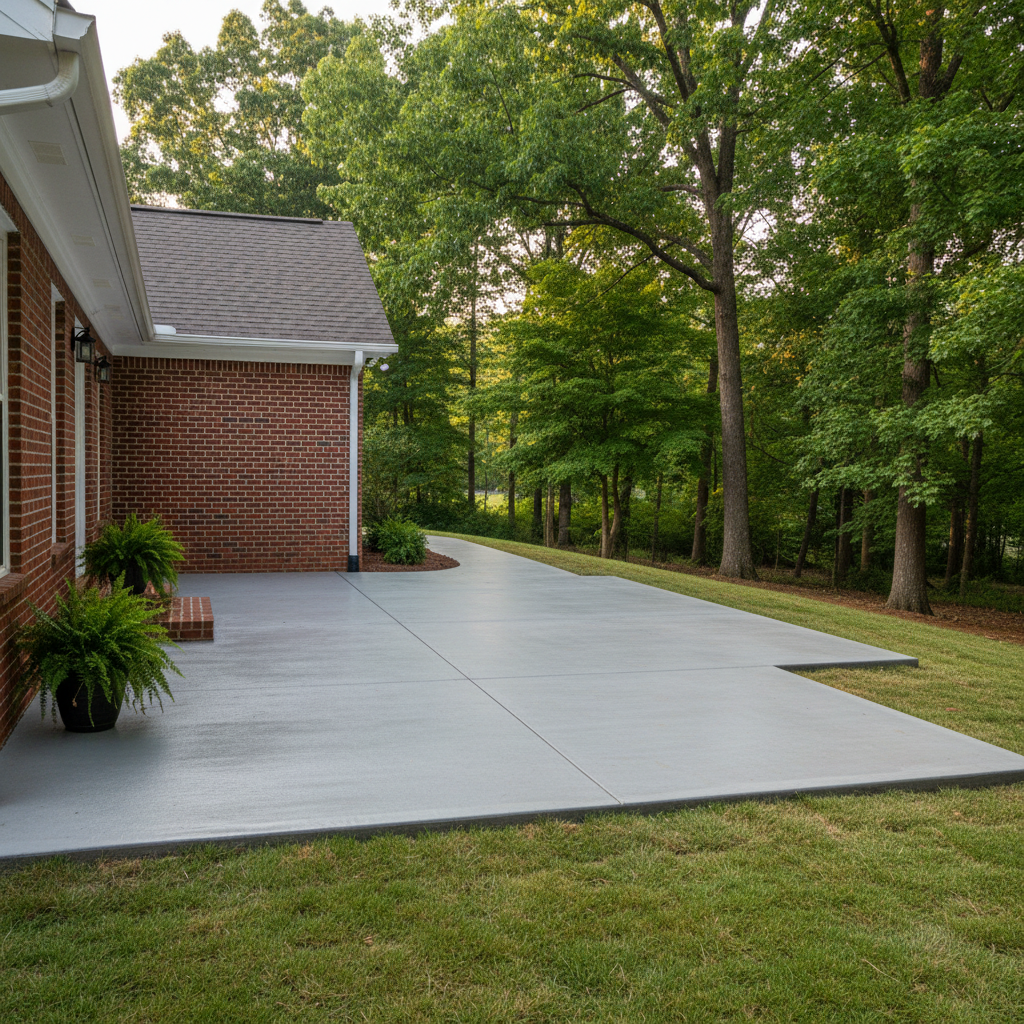
Concrete patios in neighborhoods like Five Points or Jones Valley can look pristine decades later while others start scaling after just a couple of winters. It usually comes down to timing and understanding our unique North Alabama climate. Weather plays a massive role in how flatwork cures, and if you ignore it, you are throwing money away.
Huntsville Hometown Concrete has seen people try to rush a backyard patio pour during a scorching July heatwave or squeeze in a driveway replacement right before a hard freeze. Neither ends well.
How Huntsville Weather Affects Your Pour
Our local climate throws a few distinct challenges at concrete contractors throughout the year:
- Spring brings heavy downpours and fluctuating humidity that can wash out fresh surfaces or saturate your sub-base.
- Summer brings intense heat and humidity, causing surface moisture to evaporate too fast and leave you with shrinkage cracks.
- Fall offers arguably the best window with mild temperatures and stable conditions.
- Winter brings occasional freezing nights that can completely ruin a slab if the mix water turns to ice before the chemical hydration finishes.
When to Schedule Your Flatwork
Spring and fall are generally your best bets for flatwork projects. You want daytime highs sitting comfortably between 60 and 80 degrees. When you pour in the middle of a July afternoon when ambient temperatures push past 90 degrees, the concrete sets up before you can even properly finish it. That rapid moisture loss zaps the long-term strength of your slab.
On the flip side, winter pours require special blankets, heated water, and chemical accelerators. It is doable, but it adds cost and complexity. If you are planning a new driveway or sidewalk, aim for the sweet spot of spring or autumn when the weather cooperates.
Protecting Your Investment Year-Round
Once your new flatwork is safely cured, you cannot just forget about it. Huntsville red clay soil expands and contracts heavily depending on how much rain we have had, putting stress on slabs that are not properly drained.
Keep your gutters clean so roof runoff does not pool right next to your new concrete edges. Seal your flatwork every 2 to 3 years to keep moisture and winter de-icing salts from getting into the pores. A little bit of routine care goes a long way toward keeping your concrete solid for 15 to 20 years or more.