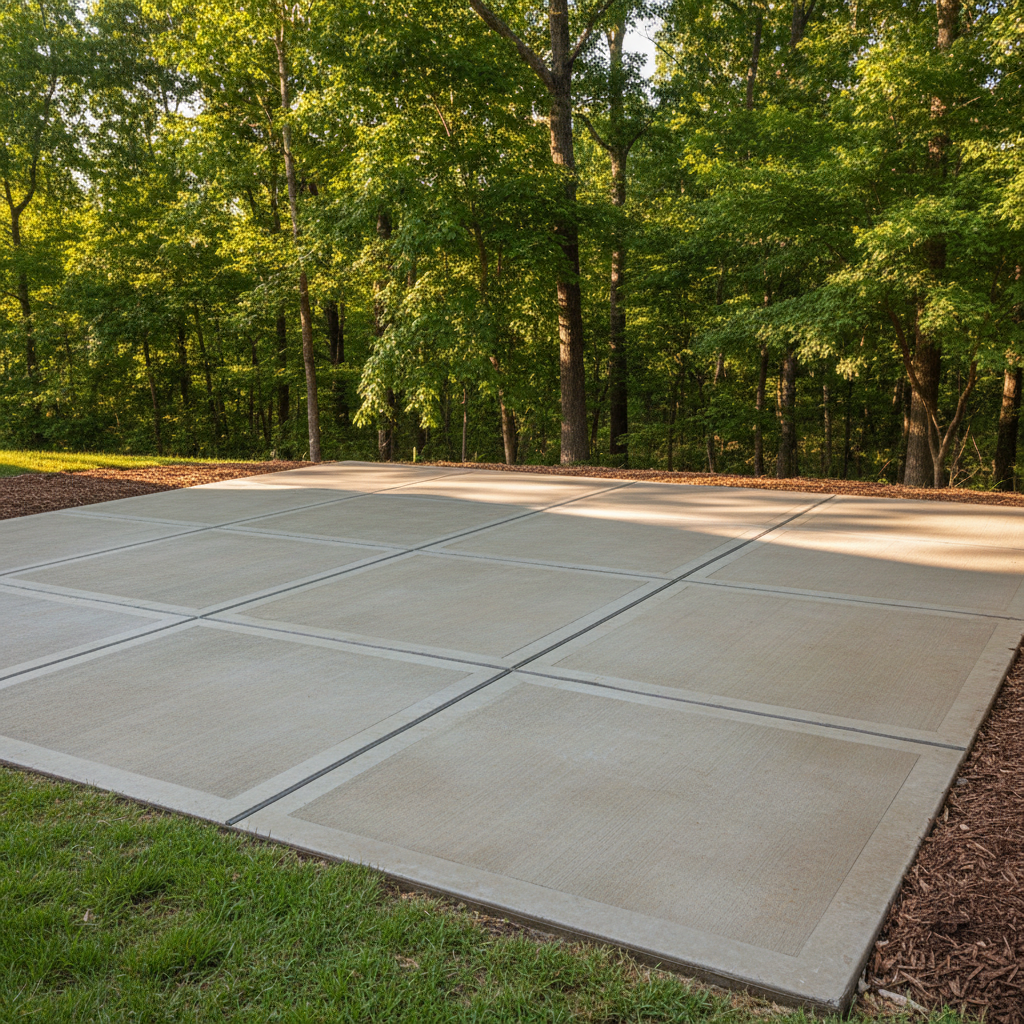
Thinking About a Concrete Project?
You've got a spot in your yard, maybe a worn-out path, or you're dreaming of a new patio. Concrete seems like the answer, right? It's durable, versatile, and can really boost your home's curb appeal. But here in Huntsville, with our crazy weather swings and sometimes clay-heavy soil, pouring concrete isn't always as simple as mixing a bag and spreading it out. I've seen a lot of folks try to tackle big concrete jobs themselves, and sometimes it works out, but often, they end up calling us at Huntsville Hometown Concrete to fix a mess that could've been avoided.
So, let's break down what you, as a homeowner, can realistically do yourself when it comes to concrete, and when it's really best to pick up the phone and get a professional involved.
Before You Even Mix a Bag: Planning & Prep
This is where you can do a lot of the legwork yourself, and it's crucial. Good prep makes or breaks a concrete job.
- Measure Everything: Know your dimensions. How big is the slab going to be? This tells you how much concrete you'll need. Don't eyeball it.
- Check Local Codes: This is huge. For bigger projects like driveways or structural slabs, you'll likely need permits from the city of Huntsville. You don't want to pour a beautiful new patio only to find out you have to tear it up because you didn't get approval.
- Clear the Area: Remove old concrete, shrubs, roots, anything that's in the way. You need a clean slate.
- Excavation & Grading: For smaller projects, like a stepping stone path or a small landing, you can probably dig out the area yourself. You'll need to dig down deep enough for your concrete and a good base layer. Make sure it slopes slightly away from your house for drainage – water pooling against your foundation is a big no-no. For larger areas, or if you're dealing with a lot of grade changes, you might need to rent some equipment, or that's when a pro can really speed things up.
- Base Material: This is non-negotiable. You need a compacted gravel or crushed stone base. It helps with drainage and prevents cracking. For a small walkway, you can spread and compact it yourself with a hand tamper. For a driveway, you'll need a plate compactor, which you can rent.
- Formwork: Building forms to hold the concrete in place is something many DIYers can handle. Use sturdy lumber (2x4s or 2x6s, depending on slab thickness) and stake them securely. Make sure they're level and square.
What you *can't* really do yourself, or shouldn't, in this stage for anything beyond a small pad, is ignore the soil. Our red clay here in North Alabama can be tricky. It expands and contracts with moisture, which can wreak havoc on an improperly prepared slab. A pro knows how to deal with this, often recommending specific base depths or reinforcement to account for it.
During the Pour: When to Call a Pro
This is where things get serious, and fast. Concrete waits for no one.
- Mixing Small Batches: If you're doing a small repair, filling a few post holes, or pouring a tiny pad (think 2x2 feet), you can absolutely mix bags of concrete yourself in a wheelbarrow or with a small electric mixer. Follow the instructions on the bag precisely.
- Pouring & Spreading: For these small jobs, you can pour the mix into your forms and spread it with a shovel or rake.
- Finishing Small Areas: A hand float and trowel can be used to smooth out small areas. Practice on some scrap concrete first if you've never done it.
Now, here's when you *absolutely* need a professional:
- Any Slab Over 20-30 Square Feet: Once you get beyond a small landing, you're talking about a lot of concrete. A concrete truck delivers ready-mix concrete, and once it starts flowing, you have a limited window to get it placed, leveled, and finished. This isn't a one-person job. You need a crew, and you need experience.
- Driveways, Patios, Garage Slabs: These are big, important, and expensive projects. They require specific tools (screeds, power floats, edgers, groovers) and the knowledge to use them effectively and quickly. An uneven driveway or a patio that doesn't drain right is a nightmare.
- Reinforcement: For larger slabs, you'll need rebar or wire mesh. Knowing where to place it and how to support it properly is key for preventing cracks.
- Expansion Joints: These are critical for larger slabs, especially in our climate where temperature swings cause concrete to expand and contract. Incorrectly placed or missing expansion joints will lead to ugly, uncontrolled cracks.
After the Pour: Curing & Sealing
You've done the hard part, or the pros have. Now, don't mess it up!
- Curing: This is just as important as the pour itself. Concrete doesn't just dry; it cures. This is a chemical process that needs moisture. Keep the concrete wet for at least 5-7 days, especially in our hot Alabama summers. You can do this by misting it with water, covering it with plastic sheeting, or using a curing compound. Skipping this step will result in weaker concrete that's more prone to cracking.
- Sealing: Once the concrete is fully cured (usually 28 days), consider applying a good quality concrete sealer. This protects it from stains, moisture, and general wear and tear. It's an easy DIY job that adds years to your concrete's life.
Look, I get it. You want to save money, and you're handy. For small, non-critical concrete projects, go for it! But for anything that you'll be driving on, walking on daily, or that's a significant part of your home's structure or appearance, trust me, you want to call in the experts. We've got the tools, the crew, and the experience to make sure your concrete project is done right the first time, saving you headaches and money down the road. Give Huntsville Hometown Concrete a call if you're looking at a bigger project; we're always happy to talk through your options.